
Last updated October 30, 2026
 Home additions & ADU
 Kitchen remodeling
 Bathroom remodeling
 Roofing
 Windows & doors
 Driveway & pavers
 Fence
Free written scope consultation - allowances, timeline, and change-order rules on paper before a single trade is scheduled
Construction Warning Signs: A Newport Beach Homeowner’s Reference Guide
The salt air that gives Newport Beach its postcard sunsets is the same salt air that eats through flashing, wicks moisture into stucco, and turns hairline cracks into structural headaches faster than almost any other environment in California. A rust stain running down stucco from a roof vent is easy to dismiss as cosmetic. In a coastal environment, it often signals that the vent flashing has corroded through and is actively channeling moisture into the wall cavity. This guide walks you through the construction warning signs that matter most in Newport Beach, what they actually mean, and when you need a professional before a small symptom becomes a five-figure repair.
Styles & brands we work with
Quick Answer
In Newport Beach, the most serious construction warning signs are those caused by salt-air corrosion and marine moisture: rust stains trailing from metal flashing, stucco cracks on ocean-facing elevations, efflorescence on retaining walls, bubbling paint on interior walls, and granule loss on composition shingle roofs. These symptoms progress faster here than inland because salt accelerates metal decay and constant humidity keeps materials damp. If you see any combination of these signs, a full-scope contractor can trace the problem back to its source rather than patching the visible symptom, as covered in our General Contractor Troubleshooting: Common Problems and How to Fix Them.
Table of Contents
- How to Read Exterior Stucco Cracks in Newport Beach
- Salt-Air Corrosion: What to Spot Before Structural Damage Sets In
- Foundation and Retaining Wall Warning Signs on Bluff and Bay-Front Lots
- Interior Moisture Signals That Originate at the Exterior Envelope
- Roofing Warning Signs Amplified in Coastal Environments
- Window and Door Warning Signs in a Salt-Air Climate
- Deck and Balcony Warning Signs You Should Never Ignore
- Common Mistakes to Avoid
- When to Call a Professional
- Frequently Asked Questions
- The Bottom Line
How to Read Exterior Stucco Cracks in Newport Beach
Stucco is the dominant exterior finish across Newport Beach, from Balboa Peninsula cottages to the larger homes along Harbor View and Dover Shores. It handles the marine climate well when installed correctly, but it does crack. The skill is in knowing which cracks are normal and which are telling you something about moisture or movement.
Cracks in stucco fall into three general categories. First, surface crazing: a web of very fine lines, often hairline-thin and covering a broad area. This is usually the result of the stucco drying too fast during original application or years of thermal expansion. It’s not a structural problem. Second, straight cracks that follow a line: often seen around window corners, along the edge of a beam pocket, or running vertically from a foundation. These are stress cracks and they’re the ones that deserve attention in Newport Beach because they can admit moisture. Third, cracks that are wide enough to fit a credit card edge, or cracks that show rust staining or efflorescence. These are active entry points for water.
One pattern unique to coastal lots: hairline cracks on the ocean-facing elevation that open and close slightly between winter and summer. This is thermal movement, and it’s normal. But if those same cracks stay open, widen over a year or two, or appear in a stair-step pattern through stucco, you may be seeing differential settlement in the underlying frame or foundation. In our experience working on ocean-facing homes in Newport Beach, hairline cracks that hold moisture longer than 48 hours after rain are the ones that need a closer look, because that’s a sign water is getting behind the finish and into the sheathing.
What to do: photograph the cracks, note their width and location, and check them seasonally. If a crack grows wider than about 1/8 inch or begins weeping during winter rains, bring in a contractor who can open a small section of stucco to confirm what’s behind it. Patch-and-paint is fine for surface crazing. For anything structural, patching hides the problem without fixing it.
Salt-Air Corrosion: What to Spot Before Structural Damage Sets In
Salt air is relentless. It works on metal every single day, and the rate of corrosion in Newport Beach is several times what you’d see ten miles inland in Irvine or Tustin. Homeowners who learn to read corrosion signs early save themselves the most money per square foot of anything on this list.
The first thing to check is metal flashing. Every penetration in your exterior, roof vents, chimney caps, plumbing vents, window head flashing, has a metal component designed to shed water. Salt air eventually pits and perforates galvanized steel flashing, and once a pinhole opens, water follows gravity into the wall cavity. The external tell is a rust stain trailing down from the flashing edge across stucco or siding. By the time the stain is visible, the flashing has typically been compromised for months or longer.
The second area is fasteners. Screws, nails, and anchor bolts installed with standard galvanized coating will begin showing rust bloom around the head within a few years of salt exposure. Check railings, exterior light fixtures, downspout straps, and deck hardware. Rust bloom on a railing bracket on an ocean-facing deck in the Balboa Peninsula or Lido Isle is not a cosmetic issue, it’s the beginning of the fastener losing structural capacity.
The third area is any exposed structural steel or post bases. Many raised foundations in Newport Beach use steel post caps or straps to connect posts to concrete piers. These sit close to the soil, where salt and moisture concentrate. When they crust over with red-brown scale, the connection is degrading. What to do: walk the exterior quarterly, and every six months take a close look at flashing, fasteners, and post connections. Replace galvanized fasteners with stainless steel or coated fasteners rated for coastal exposure. Swap out failing flashing before it channels water into places you can’t see.
A homeowner can spot most of these issues in under an hour. The hard part is acting on what you find. If you see multiple rust locations on a single elevation, you’re likely looking at a systemic material issue, not a one-off, and that’s when a full-scope contractor can evaluate the whole exterior as one system rather than addressing one stain at a time. That matters because the fix for a roof vent, for example, often involves re-flashing that vent and the surrounding roof, a coordination point between roofing and stucco trades that many homeowners end up managing themselves.
Foundation and Retaining Wall Warning Signs on Bluff and Bay-Front Lots
Newport Beach has some of the most expensive soil in California, and some of the most complicated. Bluff-top lots in areas like Cameo Shores and the cliffs above Newport Coast deal with expansive clay soils and erosion. Bay-front lots and homes along the channels in Lido Isle, Balboa Island, and Harbor Island sit on fill and reclaimed marshland that settles over decades. Both conditions produce movement patterns and warning signs that inland homeowners never see.
The sign most people notice first on a bay-front lot is a crack in a concrete retaining wall or seawall cap, sometimes accompanied by a chalky white mineral deposit called efflorescence. Efflorescence forms when water moves through concrete or masonry and deposits salts on the surface as it evaporates. A small amount on a seawall is common. But efflorescence that returns after cleaning, appears in vertical bands, or darkens after rain signals that water is actively moving through the wall. That water is carrying minerals out of the concrete, and over years, that process weakens the wall from the inside.
On bluff lots, the warning signs are different. Look for tension cracks in the soil uphill from the home, especially after a heavy rain season. Look for pavers or walkways that have pulled away from the house, or planters that tilt slightly down-slope. These can indicate slow soil creep. Also watch for doors inside the home that begin to stick seasonally, or hairline cracks that run diagonally from the corner of a window across a room corner. Diagonal cracks at wall and ceiling intersections are the classic sign of differential settlement and are more common on fill lots near the water.
If you have a retaining wall on the property, check the drainage. Walls built without weep holes or with clogged weep holes hold water behind them, and hydrostatic pressure is what eventually pushes them over. In Newport Beach, where winter storms bring heavy rain in short bursts, a saturated retaining wall can shift in a single season. The tell is a wall that begins to bow outward, even slightly, or a new gap between the wall and the adjacent hardscape. For any of these, an experienced general contractor should evaluate the condition before you spend money on surface repairs; our General Contractor Maintenance Checklist for Newport Beach Homeowners covers what that evaluation should include. The fix may be drainage, not structure.
Interior Moisture Signals That Originate at the Exterior Envelope
One of the most common misreads we see in Newport Beach homes is an interior moisture problem diagnosed as a plumbing leak when the source is actually the exterior envelope. The symptoms look similar, and in some cases the only way to know for sure is to investigate. But there are patterns that point to the envelope, and learning them can save you from tearing out drywall in the wrong room.
Paint bubbling on an exterior-facing wall is a strong signal. Plumbing supply lines and drain lines typically run in specific wall cavities and floors, not randomly around the outside perimeter of every room. If you see bubbling paint or peeling baseboard on a wall that faces the ocean, and there’s no bathroom or kitchen on the other side, the moisture is probably coming from outside. The source may be failed flashing above that wall, saturated stucco from a crack, or water blowing in through a window seal.
Efflorescence on interior walls is less common but worth knowing. When water moves through masonry or through drywall repeatedly, it can leave the same chalky mineral residue you see on exterior concrete. If you find white, powdery deposits in a garage, on a block wall, or on drywall near a sliding door, water is moving through the wall assembly. That’s an envelope issue, not a plumbing issue.
Musty smells in closets on the windward side of the house, condensation on windows in the morning that doesn’t clear by midday, or baseboards that cup and pull away from the wall are all intermittent signals of exterior moisture. In the salt-humid air of Newport Beach, dampness doesn’t dry out the way it does in Costa Mesa or Fountain Valley. It lingers, and that lingering moisture is what feeds mold inside wall cavities.
The practical approach is to observe first, then open up. Before calling a plumber, consider calling a full-scope contractor who handles both roofing and interior wall systems; they can trace the path from the outside surface to the inside stain. That diagnosis matters because fixing the interior drywall without fixing the exterior entry point just means you’ll be doing the same repair again in two years. Home remodeling in Anaheim often involves similar diagnostic work, and the same principles apply: source first, cosmetics second.
Roofing Warning Signs Amplified in Coastal Environments
Roofs in Newport Beach age on an accelerated schedule. The combination of salt spray, constant UV exposure, and seasonal Santa Ana winds means that a composition shingle roof rated for 30 years often shows meaningful wear by year 15 and needs replacement by year 20 or 22. If you know what to look for, you can plan that replacement rather than being surprised by it.
Granule loss on composition shingles is the first sign. Those granules protect the asphalt layer beneath from UV, and once they wash off, the shingle’s life span collapses quickly. In Newport Beach, you’ll often see granule loss concentrated on the south-facing and west-facing roof planes, the ones that take the brunt of the afternoon sun and the prevailing ocean breeze. Check the gutters after a rain. A thick layer of granules in the gutter or at the base of the downspout is a measurable sign that the roof has entered its end-of-life phase. Also look for a patchy, uneven color pattern across the roof surface, which means different shingles are aging at different rates.
Lifted flashing edges are the second sign. Flashing is the metal that seals the joints where the roof meets a wall, a chimney, a vent pipe, or a valley. Salt air corrodes the metal, but wind and thermal expansion lift the edges. In a coastal environment, these two problems happen together: the metal corrodes where it was fastened, wind catches the edge, and now you have a gap where water can blow in during a winter storm. Look around chimney bases and where lower roof planes meet upper walls. If you can see the edge of the flashing from the ground, or if it appears wavy rather than tight, it’s failing.
Soffit discoloration is a third signal that’s often missed. Water that gets past the roof edge or the gutter can run back along the soffit, and in Newport Beach’s humid air, that moisture lingers long enough to darken the wood or show as streaks on painted or vinyl soffit panels. If you have rust-colored drip lines running down the soffit at regular intervals, water is pooling above it. Often this comes from a roof leak at the edge or a gutter that isn’t draining.
For homes with tile roofs, look for slipped or cracked tiles, especially after a Santa Ana wind event. A cracked tile doesn’t always leak immediately, but once the underlayment is exposed to UV, it degrades fast. The learning here: a roof is a system of materials working together. If one layer fails, it shortens the life of the layer beneath it. Address granule loss, lifted flashing, and soffit staining when you first notice them, not when the ceiling starts dripping.
Window and Door Warning Signs in a Salt-Air Climate
Windows and exterior doors take a beating in Newport Beach. Aluminum frames corrode, wood frames swell and rot, and the seals that keep water out of the wall become brittle. On paper, a window is rated for 20 or 30 years. In a marine environment, the hardware and weatherstripping often fail first.
Fogging between double panes means the seal has failed. That reduces the window’s insulating value, but the bigger problem in a salt-air climate is what the failed seal tells you about the frame: if the frame is aluminum and you also see white powdery corrosion at the corners, the window is entering end-of-life. Coastal corrosion on aluminum window frames typically starts at the weep holes and the corners, where water sits. Once the corner joins are compromised, the whole frame loses rigidity, and the window no longer seals against the wall.
Wood-framed windows in older Newport Beach homes, especially on bayside or ocean-facing elevations, often show soft spots at the lower sash and sill. Probe gently with a screwdriver in an inconspicuous area. If the wood gives, it’s rot, not just paint failure. Wood rot progresses from the outside in, and by the time you see it, the failure is often larger than the visible area. Door thresholds and the bottom rail of exterior doors are similarly vulnerable because they sit at the exact point where water splashes up from the deck or walkway.
Hardware is the early warning most people ignore. Exterior door handles and hinges that develop pitting or rust staining within a few years of installation are telling you that the finish wasn’t rated for marine exposure. The same goes for window cranks and locking mechanisms. This isn’t just an appearance issue. Once the hardware corrodes, it seizes, and then a window or door gets left slightly open or can’t be locked, which creates a security problem and a moisture problem at the same time.
When replacing windows or doors in Newport Beach, material selection matters. Impact-rated windows from coastal-rated manufacturers, with frames specified for marine environments, will far outlast standard products from a big-box store. If you’re replacing multiple windows at once, a contractor who manages the full exterior envelope can coordinate window flashing, stucco repair around the openings, and interior trim in one pass, instead of leaving you to stitch together separate window, stucco, and drywall crews. A general contractor in Anaheim would handle the same sequencing for inland homes, but the material spec changes when you’re within a mile of the water.
Deck and Balcony Warning Signs You Should Never Ignore
Decks and balconies are where salt-air corrosion turns dangerous. These structures are suspended or elevated, which means a component failure doesn’t just leak, it can fail catastrophically. In Newport Beach, where ocean-facing balconies are common, the warning signs deserve close attention.
Connection points are the highest-risk areas. The metal brackets, bolts, and post caps that connect the deck to the house or the posts to the footings are often the first components to corrode in salt air, and they’re the components that hold the entire assembly together. Look for rust staining running down from the connection points. Look for cracks in the wood or stucco around where the deck attaches to the house. If the connection point is pulling away, even slightly, you have an active structural problem.
Deck flashing is the second signal. The joint where a deck or balcony meets the exterior wall is one of the most leak-prone junctions in any building, and in Newport Beach, it’s under constant attack from wind-driven rain and salt spray. A properly flashed deck has metal that runs up behind the wall finish and down over the deck surface. If you see a gap, cracked caulking, or water staining below the deck-to-wall junction, water is getting into the wall. The fix often requires removing the first course of decking and the exterior finish to install proper flashing.
Railings fail at the base. Post attachments collect water, and in salt air, the fasteners corrode quickly. Give your railings a light push. Movement at the base is a sign that corrosion is eating the connection. This is a simple test that takes 30 seconds and can prevent a serious fall.
On any deck or balcony in Newport Beach, if you see rust at a connection, movement in a railing, or staining where the deck meets the house, stop using the structure until it has been inspected. This isn’t an area for wait-and-see. A licensed contractor can assess the connections, determine what needs replacement, and confirm whether the deck structure is still sound. When we inspect ocean-facing decks, we look at the deck as part of the whole exterior system, the same way we’d evaluate the roof, the windows, and the stucco together, because they’re all connected.
Common Mistakes to Avoid
- Painting over rust stains. A fresh coat of paint hides the symptom for a season, but the corroded flashing or fastener underneath keeps degrading. By the time the stain returns, the wall cavity may already be saturated.
- Patching stucco cracks without diagnosing the cause. If the crack is from ongoing movement, the patch will crack again within a year, and water will find the seam.
- Assuming a leak is a plumbing problem. In coastal homes, water on interior walls often traces back to failed flashing, cracked stucco, or a window seal, not a supply line. Diagnosing the wrong system doubles the repair cost.
- Using inland-grade materials on a coastal home. Standard galvanized fasteners, builder-grade flashing, and non-marine-rated window frames all corrode prematurely within a few miles of the ocean. Material spec matters as much as installation quality.
- Waiting until the ceiling drips to address a roof issue. By the time water reaches the interior ceiling, it has soaked through the roof deck, insulation, and possibly the framing. Fixing the roof at the first sign of granule loss or lifted flashing costs far less than structural drying and mold remediation.
- Handling multiple exterior repairs as separate projects. If the roof flashing, stucco, and window seals are all failing, treating them as three bids from three contractors leaves gaps at the transitions, which are exactly where coastal water gets in. A single full-scope contractor handles the transitions as part of the project.
When to Call a Professional
Some items on this list are watch-and-track. Others are act-now. Call a professional if you see a rust stain trailing from any metal flashing on the exterior, because water is already moving into the wall. Call if a stucco crack has widened past about 1/8 inch or if cracks are forming a stair-step pattern, which points to settlement. Call if a retaining wall is bowing, if a deck or balcony railing moves when you push it, or if you have fogged windows combined with frame corrosion. In these cases, waiting means the repair gets larger and more invasive every month. Polaris Contractors offers free estimates in Newport Beach. Call (855) 473-6535 to have one of our team walk the property and tell you what’s happening and what it will take to correct.
Frequently Asked Questions
Newport Beach homes face salt-air corrosion, marine humidity, and soil conditions (bluff erosion and fill settlement) that inland homes don’t. The most distinctive signs are rust stains from corroded flashing, efflorescence on seawalls and retaining walls, accelerated granule loss on ocean-facing roof planes, and stucco cracks that don’t close seasonally. Any homeowner within about two miles of the water should look for these signs quarterly.
A flashing replacement on a single roof vent typically runs $300 to $800, but an exterior wall that has been saturated for months often involves stucco removal, sheathing replacement, and interior drywall work that can run $5,000 to $15,000 depending on the area affected. The range is wide because the cost depends on how long the moisture has been active and how far it has moved through the wall assembly. Calling early is genuinely the difference between a small fix and a major one. Call (855) 473-6535 for an exact quote, estimates are free.
Yes. A full-scope general contractor manages all the trades under one project agreement, which is especially useful in coastal work where the roof, flashing, stucco, and interior finishes all meet at the same junctions. For help deciding whether to tackle issues yourself or bring in a pro, see our DIY vs Professional Construction: The Newport Beach Homeowner’s Decision Guide. When one contractor owns the sequence, the flashing gets installed correctly behind the stucco, the window gets sealed to the wall before the trim goes on, and the transitions that leak the most are handled as part of a coordinated plan rather than left to three separate crews who never speak to each other.
Walk the exterior every three months with a specific eye on metal components: flashing edges, fasteners, railing connections, and deck hardware. After any major Santa Ana event, check the roof for slipped tiles or lifted flashing. After the first significant rain of the season, check the interior of ocean-facing walls for bubbling paint, water staining, or a musty smell. A quarterly rhythm catches most problems in their early, inexpensive stage.
Not by itself. Efflorescence indicates water moving through the concrete, which is common on seawalls and retaining walls exposed to marine conditions. It becomes a concern when it returns quickly after cleaning, appears in vertical bands, or is joined by cracking, bowing, or a gap opening at the top of the wall. Those signs point to hydrostatic pressure building behind the wall, which can lead to structural movement. If you’re seeing them together, have the wall evaluated before the next rainy season.
They’re vulnerable to different issues. Homes built before the mid-1990s often used standard galvanized fasteners and flashing that weren’t specified for marine exposure, so corrosion is more advanced. Many also predate modern moisture barrier standards. Newer homes built to current coastal codes handle salt air better, but all homes in Newport Beach need ongoing attention. Material selection and maintenance matter more than original build quality over a 20-year horizon. For a full assessment of your home’s exterior condition, call (855) 473-6535.
The Bottom Line
Construction warning signs in Newport Beach read differently than they do inland. A rust stain is a flashing failure, not a blemish. A hairline stucco crack on an ocean-facing wall is a moisture entry point. Efflorescence on a retaining wall is water moving through the concrete. The common thread is that these problems compound quickly in salt air and marine humidity, and treating them early is dramatically cheaper than letting them run. The most useful habit you can build is a quarterly exterior walk with a specific checklist: flashing edges, fastener rust, crack width, roof granules, and deck connections. When you find something, address it at the source. Home renovation in Anaheim is a helpful reference for interior scope planning, but in Newport Beach, the exterior envelope always comes first. If you want an experienced set of eyes on your home in Newport Beach, call Polaris Contractors at (855) 473-6535 for a free estimate. One team, full scope, from the roof down to the pavers.
Written by the team at Polaris Contractors, serving Newport Beach since 2018. Explore more guides & resources for coastal homeowners.
See the difference
 Before
 After
 Before
 After
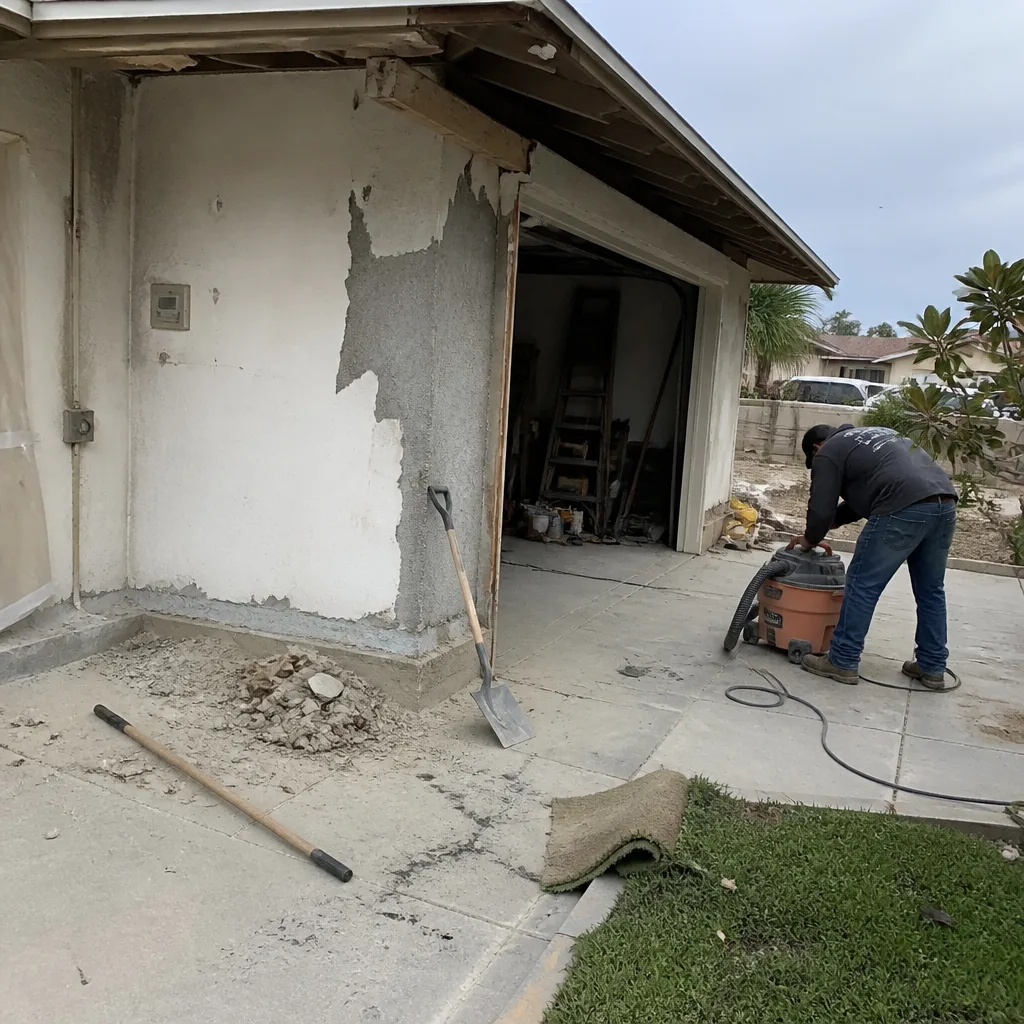 Before
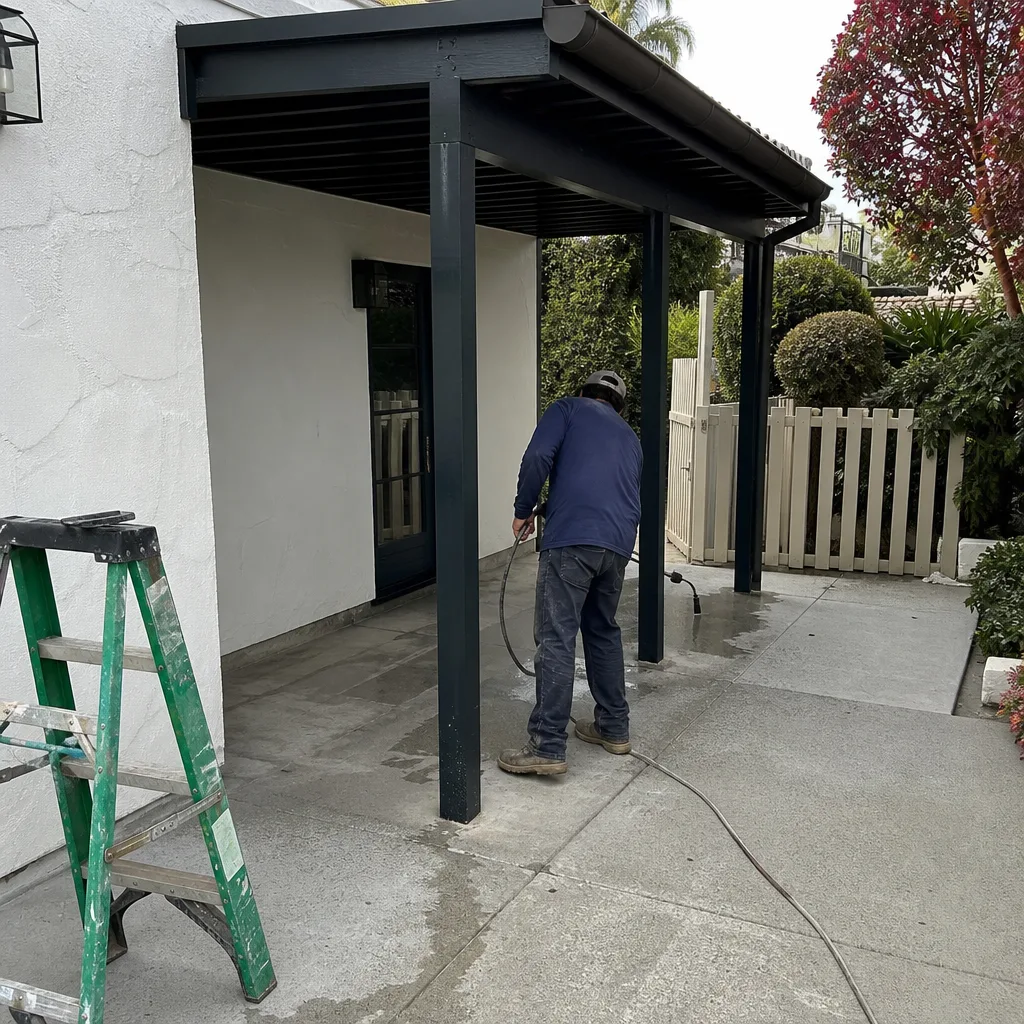 After