
Last updated October 30, 2026
 Kitchen remodeling
 Bathroom remodeling
 Home additions & ADU
 Roofing
 Windows & doors
 Driveway & pavers
 Fence
Free written scope consultation - allowances, timeline, and change-order rules on paper before a single trade is scheduled
General Contractor Troubleshooting: Common Problems and How to Fix Them
Here’s a truth most homeowners learn too late: renovation disasters rarely announce themselves with a dramatic crash. The most expensive mistake usually happens quietly, around week two, buried in a change order that sounds entirely reasonable at the time. “Just extend the island by eight inches,” the homeowner says. The contractor nods. And three months later, the electrical rough-in doesn’t match the cabinet layout, the stone fabricator measured the old footprint, and everyone is pointing fingers. In Newport Beach, where remodels on Lido Isle and the Peninsula routinely cross into six figures, we’ve watched this exact sequence play out enough times to know it’s preventable. This guide walks through the most common general contractor problems, where they come from, and how a homeowner can fix them before they become line items.
Quick Answer
Most renovation problems stem from three predictable failure points: poorly written change orders that quietly expand scope, unsupervised subcontractors making decisions they shouldn’t, and payment schedules that don’t align with verified work. A homeowner who learns to read those three moments like a general contractor will catch most trouble before it costs real money.
Styles & brands we work with
Table of Contents
- How to Read a Change Order Like a General Contractor
- What to Do When a Subcontractor Makes Decisions Without You
- Inspection Failures: The GC’s Fault vs. Yours
- Payment Draw Schedules and the Warning Signs They’re Off
- Lien Waivers: The Paperwork That Protects Your House
- When Materials Don’t Match the Contract
- Delays: What’s Legitimate, What’s Excusable, What’s Neither
- Common Mistakes to Avoid
- When to Call a Professional
- Frequently Asked Questions
How to Read a Change Order Like a General Contractor
A change order is a written amendment to your contract that alters scope, cost, or schedule. In theory, it’s a neutral document. In practice, it’s where most renovation budgets quietly die. The issue isn’t that change orders exist. Remodels uncover conditions nobody could have predicted, especially in older Newport Beach homes where original framing from the 1960s hides behind drywall. The issue is that homeowners sign them without reading them the way a contractor would.
Legitimate change orders share three characteristics. First, they name the specific condition that triggered them. “Framing in east wall not square” is legitimate. “Additional work as needed” is not. Second, they price the change using the same markup and labor rates as the original contract, and the math is shown. Third, they state what happens to the schedule. A change order that adds three days of plumbing work without adjusting the completion date is a red flag, not a clerical oversight.
The phrases that should stop you cold:
- “As discussed” – unless the discussion is also documented in writing, this phrase means the contractor is relying on a verbal conversation to justify a price. Ask for the discussion to be summarized in writing on the change order itself.
- “Owner directed” – this is often legitimate, but it shifts responsibility to you. If you did not direct the change in writing, do not sign a change order that says you did.
- “Time and materials” – this is open-ended billing. It has a place for genuinely unknowable work like foundation excavation, but it should always carry a not-to-exceed cap. No cap, no signature.
Here’s a practical approach. When you receive a change order, read it in three passes. Pass one: identify the specific trigger. Pass two: compare the line items to the original scope. Are they adding work, or covering work that was already in the contract? A contractor who double-charges for work already covered by the original agreement has a process problem, not a pricing problem. Pass three: check the schedule impact. Then sign only if all three passes check out.
In Newport Beach, where coastal properties often carry stricter structural requirements and HOA design review conditions on Balboa Island and Corona del Mar, legitimate field adjustments are common. What’s less common is a homeowner who knows the difference between a legitimate adjustment and scope creep. Now you do.
What to Do When a Subcontractor Makes Decisions Without You
Here’s the scenario we hear most often from Newport Beach homeowners: your general contractor is running three jobs across town. The tiling sub shows up on Tuesday. You walk through the master bath and mention that the niche might look better centered on the wall. The sub nods, moves the niche six inches, and now the tile pattern doesn’t line up because nobody told the GC. Or worse, the sub decides on their own that the waterproofing detail “isn’t necessary for this application” and now you have a shower pan with no waterproofing inspection path.
The fix starts before the sub ever sets foot on site. Your contract with the general contractor should state in writing that all changes, decisions, and field questions go through the GC, never directly between homeowner and sub. This sounds bureaucratic. It prevents exactly the disaster described above.
If a subcontractor attempts to make a decision without your GC present, do this:
- Do not agree to the change verbally. Say, “Let’s have the general contractor weigh in on this.”
- Contact your GC immediately, in writing. Text or email is fine. State the decision the sub proposes to make and ask for confirmation.
- If the GC approves, ask for it in writing, even if it’s a one-line email. That email becomes your paper trail.
- If the GC does not respond promptly, tell the sub to continue working on everything else and hold on the decision in question.
- If the sub refuses to wait, that’s a conversation with the GC about the sub’s judgment, not a reason to cave.
A competent general contractor will thank you for this. The full-scope model at Polaris Contractors home exists precisely because unsupervised subs are the single most common source of avoidable rework. We don’t run jobs where homeowners are left negotiating field decisions with whoever happens to be holding a trowel that morning. When you hire a General Contractor in Anaheim from our team, the coordination burden is ours because it should be. And when the GC manages the conversation, a sub saying “oh, this will be fine” doesn’t become your liability.
Inspection Failures: The GC’s Fault vs. Yours
When an inspector fails a phase of work, assigning blame matters because it determines who pays for the correction. The line between contractor responsibility and homeowner responsibility is surprisingly clear once you know what to look for.
Inspection failures that are always the general contractor’s fault:
- Work performed out of sequence. If your GC let the drywall hangers close up walls before the rough electrical inspection, that’s a process failure. The inspector was never going to pass a covered-up rough-in.
- Pulled a permit for the wrong scope. Adding a load-bearing beam but omitting it from the permit application is the contractor’s error. Inspectors check against approved plans.
- Subcontractor work that doesn’t meet code. The plumbing sub who used the wrong slope on a drain line answers to your GC, not to you. The GC’s job includes holding subs to code.
- Missing or inadequate fire-blocking, nailing patterns, or structural connections. These are details an experienced GC knows to check before the inspector arrives.
Inspection failures homeowners often cause, usually without realizing:
- Directing a sub to alter work after inspection. The roof inspector passes the nailing pattern, then you tell the roofing crew to move a vent because it blocks the ocean view. The correction creates a new condition the inspector hasn’t seen. Now you own the problem.
- Selecting products without code verification. That European tub filler looks beautiful, but if it doesn’t meet California’s flow-rate or anti-scald requirements, the plumbing inspection will fail. Your GC should vet products before purchase, but when homeowners buy directly and skip that step, the fix is on them.
- Scheduling furniture or finish work in an area before final inspection. A final inspection can’t happen in a room full of moving boxes. Delaying the certificate of occupancy because the room isn’t accessible is not the GC’s failure.
Newport Beach enforces California’s building codes with specific coastal amendments, particularly around wind load, moisture management, and seismic anchoring. A general contractor doing regular work in Home Renovation in Anaheim and the surrounding region knows which inspectors in which jurisdictions look hard at which details. That local knowledge prevents a lot of avoidable callbacks.
Payment Draw Schedules and the Warning Signs They’re Off
A payment draw schedule is the sequence of payments you make as the project progresses. The purpose is simple: you pay for work that is verifiably complete, and the contractor gets cash flow to keep buying materials and paying subs. When the draw schedule is built correctly, neither party carries unfair risk. When it isn’t, somebody is about to lose money.
The right draw schedule ties each payment to a visible, verifiable milestone. For a kitchen remodel, that might look like:
- Deposit: 10% at contract signing (California caps deposits at 10% or $1,000, whichever is less, for home improvement contracts)
- Demo complete and rough framing passed: 20%
- Rough plumbing, electrical, and mechanical passed inspection: 25%
- Drywall hung, taped, and textured: 15%
- Cabinets, counters, and fixtures installed: 20%
- Project passed final inspection and punch list complete: 10%
The percentages shift by project type, but the principle holds: money follows verified progress, and the final payment is always held until the job is substantially complete and final inspection has passed. Never let the final payment go out before the inspector signs off.
Warning signs that a draw schedule is off:
- Front-loaded deposits. If a contractor asks for 30% or 40% before demo starts, you’re financing their other jobs. Here’s the polite no: “I’ll release the legal deposit now and the rest when the rough-in passes.”
- Milestones described vaguely. “Progress payment at week six” isn’t a milestone. Progress toward what? Demand milestones tied to visible work or inspections.
- Requests for money to “buy materials” in cash before the contract schedule calls for it. Material procurement is a real cost, but it should already be accounted for in your initial draw. A contractor running out of money mid-job is managing cash poorly, and you are not their lender.
- Draw demands that arrive before the work was actually done. If the schedule calls for the 25% draw when rough electrical passes and the electrical sub hasn’t finished, the payment isn’t due. Hold the line.
In Newport Beach, where custom home remodels regularly involve kitchen and bath packages with premium materials like Cambria and Caesarstone counters, Kohler fixtures, and Moen bath hardware, material deposits are a standard part of the early draw. The key is that those deposits track to specific, identifiable orders. At Polaris Contractors, we itemize material deposits by brand and order date so a homeowner can verify the money went to the fabricator or distributor it was supposed to, rather than into general operating float.
Lien Waivers: The Paperwork That Protects Your House
A lien waiver is a document from a contractor, subcontractor, or supplier stating they have been paid for work or materials through a specific date, and they waive their right to file a mechanics lien against your property for that amount. In Caliafornia, mechanics liens are a serious legal tool. A sub or supplier who doesn’t get paid can file a lien on your home even if you paid your general contractor in full. The GC took your money, didn’t pay the sub, and now the sub is legally attaching a claim to your property.
This has happened in Orange County often enough that it’s a known pattern in the local construction bar. Homeowners who skipped lien waivers have faced liens filed on multimillion-dollar Newport Beach and Laguna Beach properties where the general contractor deposited the final draw and disappeared without paying the plasterer or the stone fabricator. The homeowner paid twice: once to the GC, once to release the lien.
The protection is simple. At every payment draw, require lien waivers from everyone who could file one: the GC, each subcontractor, and major material suppliers. The waivers should be unconditional for the work already paid and should cover the dollar amount of the draw. For the final payment, your GC should provide a final release from every sub and supplier on the job, plus a release from the GC.
If a contractor resists providing lien waivers, do not make the payment. A legitimate contractor has no problem with the paperwork because it protects them too. A contractor who finds the request suspicious is telegraphing a cash-flow problem. In our full-scope practice, lien waivers are part of every draw package we prepare for every project, including full Home Remodeling in Anaheim projects and larger Newport Beach renovations. It’s not friction. It’s how professional jobs are run.
When Materials Don’t Match the Contract
There’s a moment in every remodel when materials arrive on site and something doesn’t look like the sample you approved. The quartz veining is darker, the cabinet finish reads more yellow, the tile has a sheen you didn’t see in the showroom. Sometimes it’s a legitimate substitution. Sometimes the contractor ordered the wrong thing. The distinction is knowable, and you should not accept “natural variation” as a blanket explanation.
Here’s the sequence we recommend. First, pull the written specification from your contract. If the contract says “Silestone Eternal Calacatta Gold” and the slabs that arrive are a different SKU, that’s a substitution, not variation. Second, check the order documentation. A legitimate supplier will have an order confirmation showing the exact SKU, lot code, and fabrication order. Third, compare the lot code on the delivered material to the order. Natural stone and quartz both carry lot and bundle numbers specifically because variation is real and manageable.
If the material is a legitimate substitution, your contractor should have flagged it and gotten written sign-off before delivery. Substitutions happen for good reasons: discontinued lines, backorders that would delay the project by twelve weeks. The failure is in the communication, not necessarily the product. But if the substitution happened without your written approval, you have leverage: require the contractor to provide the specified product, or accept the substitute pursuant to a written change order confirming the different material at no added cost, or provide a credit.
If the contractor ordered the wrong thing, the correction is on them. This is not debatable. A written contract that specifies materials is a legal document. A contractor who orders the wrong countertop, wrong window line, or wrong flooring pattern has breached the spec, and the remedy is replacement at their cost.
Delays: What’s Legitimate, What’s Excusable, What’s Neither
Every renovation faces delays. The question is whether the delay is a legitimate field condition, an excusable supply-chain event, or a management failure. Learning to tell them apart will save you months of frustration.
Legitimate field-condition delays. The wall you opened wasn’t square. The subfloor was rotted. The original 1960s framing doesn’t meet current seismic code. These are conditions that couldn’t be known until demolition revealed them, and they require additional engineering, re-framing, or remediation. In Newport Beach, where coastal moisture and decades of salt air have worked on many original structures, these discoveries are routine. The delay is legitimate because the alternative is building on a compromised structure.
Excusable supply-chain delays. Custom windows with an eight-week lead time are an excusable, predictable delay that should have been built into the schedule from the start. What’s excusable depends on whether the schedule accounted for it. If the project was planned knowing the windows take eight weeks and the contractor ordered them at the right time, an eight-week wait is not a delay at all. It’s the schedule working as planned. If the contractor didn’t order until demo day and then tells you the windows won’t arrive for eight weeks, that’s not a supply-chain delay. That’s a scheduling failure.
Management failures dressed as delays. The sub didn’t show because they were pulled to another job. The GC has three projects running simultaneously and can’t staff yours. Materials weren’t ordered until the week they were needed. These are not delays a homeowner should absorb without documentation. Your contract should include a start date, a substantial completion date, and a schedule of key milestones. When a delay occurs, ask for the revised schedule in writing, ask what caused the delay, and ask what recovery plan is in place.
Common Mistakes to Avoid
- Signing a change order without reading it. The change order becomes part of your contract. If the language is vague, the price adjustment is open-ended, or the schedule impact isn’t stated, don’t sign. Every change order should be specific, priced, and dated.
- Paying for work before it’s verified. “Trust me, the drywall will be done Tuesday” is not a reason to release a draw on Monday. Money follows verified milestones. Hold every payment until the work is visibly complete and inspected where required.
- Making decisions directly with subs. The moment you tell a sub to change something, you’ve bypassed the contract chain and blurred responsibility. All changes go through the general contractor, in writing.
- Skipping lien waivers. If the GC doesn’t pay a sub, the sub can lien your house even though you paid the GC. Waivers are the only protection. Never make a draw payment without them.
- Selecting materials without spec verification. That beautiful faucet may not meet California code. Before you buy anything, have your GC verify the product is compliant with local requirements. In Newport Beach, coastal codes add another layer of product standards.
- Assuming an unlicensed contractor is cheaper. In California, using an unlicensed contractor on a project over $500 is a legal risk. You also lose the protections of the Contractors State License Board’s recovery fund. The savings disappear the first time something goes wrong.
- Not documenting approvals in writing. “I said it was fine on the phone” never ended well for anyone. Approvals, even minor ones, should happen in writing. Email works. Text works. Verbal doesn’t.
When to Call a Professional
Some problems are solvable with a phone call and a conversation. Others require bringing in professional help before the situation escalates. Call a general contractor when the work involves structural changes, load-bearing walls, waterproofing, electrical panels, gas lines, or anything that requires a permit. Call when you’ve lost confidence in your current contractor and need a second opinion on the state of the project. Call when you’ve received a lien notice. Call when an inspection has failed twice for the same issue. And call when you’re planning a renovation and want it managed properly from the first contract through the final walk-through. Polaris Contractors offers free estimates in Newport Beach, call (855) 473-6535.
Frequently Asked Questions
The most common problem is a communication breakdown around changes to scope. A homeowner requests something informally, the contractor implements it, and months later everyone disagrees about what was said, what was authorized, and who pays for it. The fix is written change orders for everything, no exceptions.
Yes. In California, subcontractors and suppliers have independent lien rights. If your general contractor fails to pay a sub, that sub can file a mechanics lien against your property even if you paid the GC in full. This is why lien waivers from every sub and supplier are required at every draw.
A legitimate change order names the specific condition that triggered it, prices the change using the original contract rates, shows the math, and states the schedule impact. A change order that is vague, open-ended, or signed without schedule implications is a red flag. Ask for written specifics before signing.
If the inspector fails a phase of work, your first step is to determine whether the failure stems from the contractor’s work or from a decision you made directly with a sub. Contractor work that doesn’t meet code is the contractor’s problem to fix. Decisions you made that altered the original scope are yours. In Newport Beach, coastal code requirements around wind, moisture, and seismic safety mean product selections and structural alterations need professional vetting early in the planning phase. For help finding the right professional, see our guide on How to Hire a Construction Contractor in Newport Beach: A Step-by-Step Guide.
The final payment should be released only after the project has passed final inspection, the punch list is complete, and you have received lien waivers from the general contractor, every subcontractor, and major material suppliers. Releasing the final payment before these three conditions are met puts you at unnecessary financial risk.
Yes, but the risk profile is different. Prefab ADU additions through manufacturers like Abodu, Dvele, and Plant Prefab involve factory-controlled construction, which reduces many field-condition risks, but site work, foundations, utility connections, and final finish work still require licensed general contracting. The same rules about change orders, payment draws, and lien waivers apply.
The Bottom Line
Most renovation problems are not acts of God or bad luck. They are process failures that show up at the same three moments in every project: when scope changes, when payment moves, and when subcontractors operate without oversight. A homeowner who learns to read change orders, hold draws to verified milestones, and demand lien waivers has already avoided 90% of what goes wrong. The rest comes down to hiring a contractor who owns the whole scope rather than one trade at a time. The guide above is the operating manual for that. Use it. Your renovation budget will survive contact with reality. For more guides & resources, visit our blog.
Written by the team at Polaris Contractors, serving Newport Beach since 2018.
See the difference
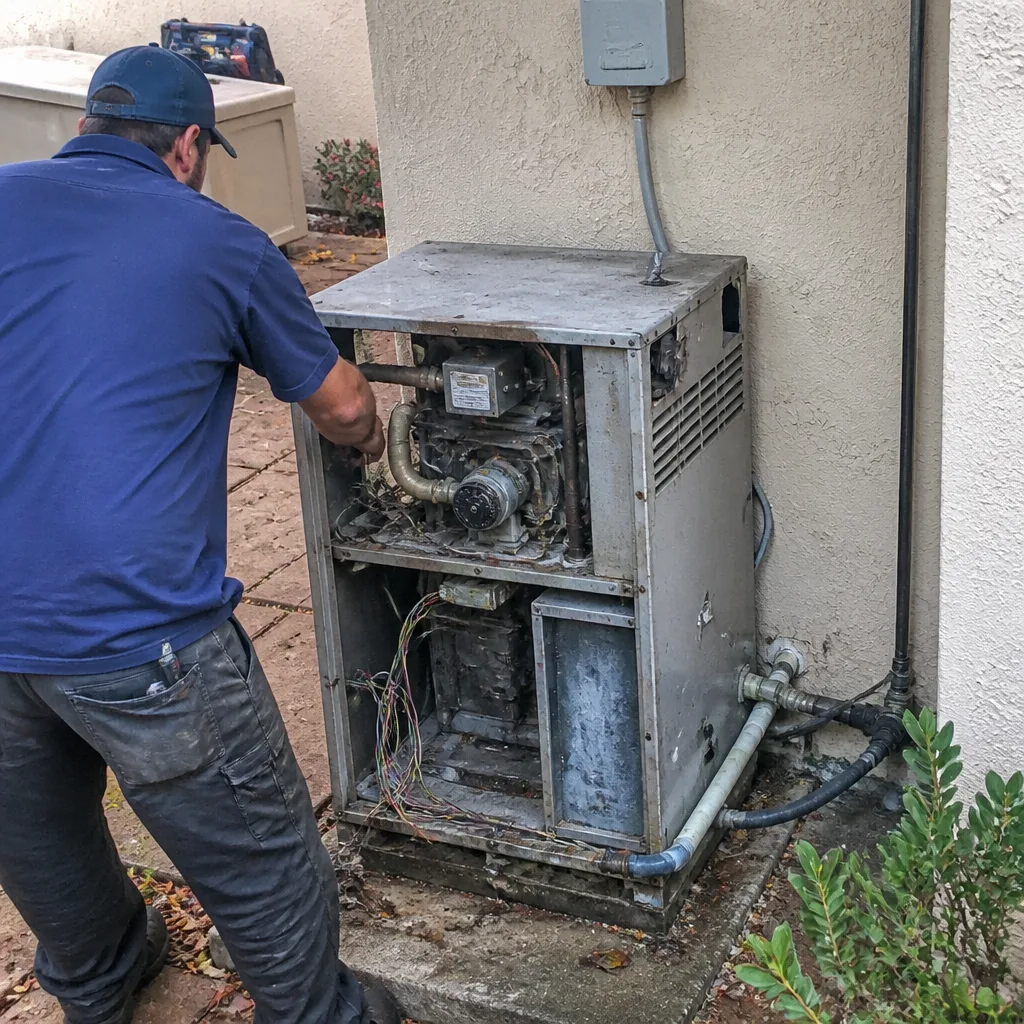 Before
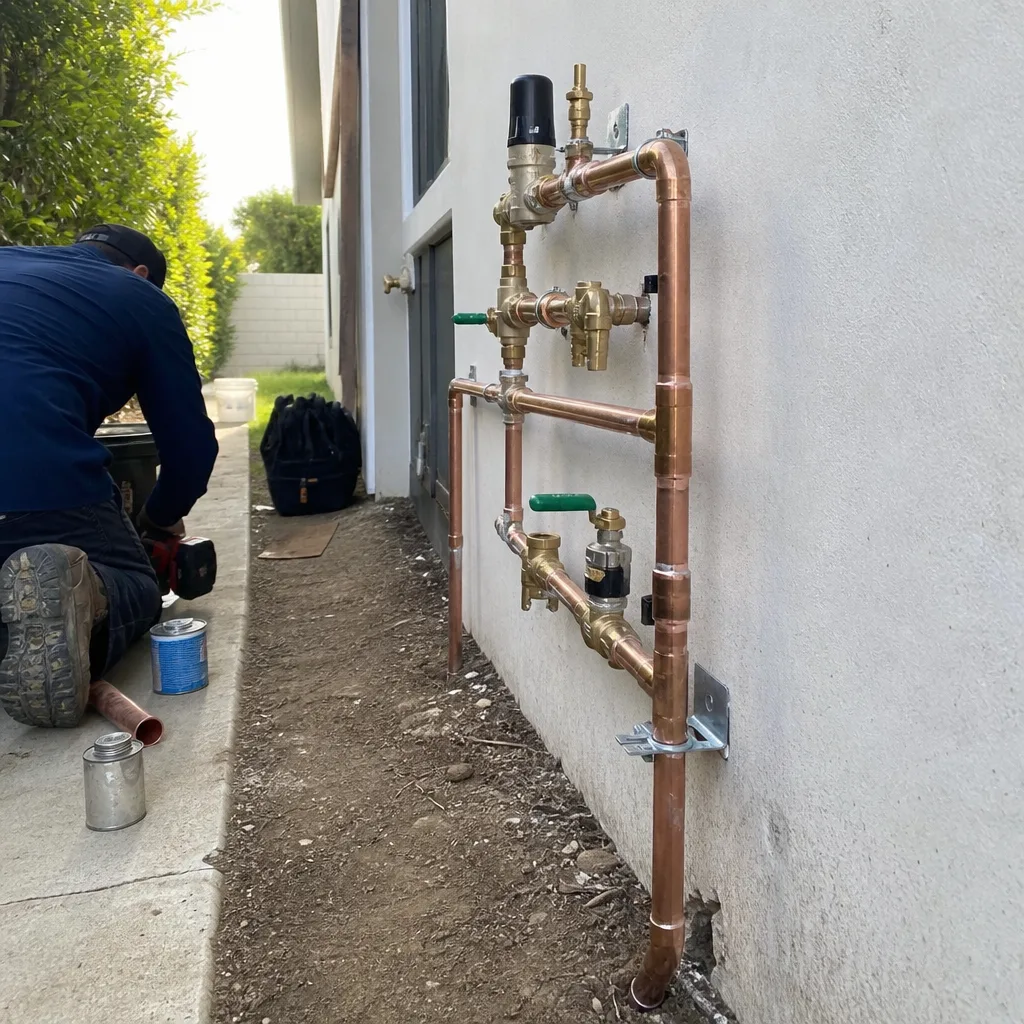 After
 Before
 After
 Before
 After