
Last updated October 30, 2026
 Home additions & ADU
 Kitchen remodeling
 Bathroom remodeling
 Roofing
 Windows & doors
 Driveway & pavers
 Fence
Free written scope consultation - allowances, timeline, and change-order rules on paper before a single trade is scheduled
DIY vs Professional Construction: The Newport Beach Homeowner’s Decision Guide
Here’s a number that should make any Newport Beach homeowner pause: according to California’s Contractors State License Board, any construction project valued at $500 or more in combined labor and materials legally requires a licensed contractor unless you qualify for a narrow, specific exemption. The homeowner who installs their own recessed lighting without a permit in Newport Beach isn’t just risking a failed inspection. They’re creating a material disclosure issue that can delay or crater a future home sale. This guide draws the line at legality first, then at competency. You’ll learn exactly which projects California law allows you to take on yourself, which ones trigger permit requirements you can’t legally self-perform, and how to measure the true cost of DIY against hiring a professional in a coastal city where salt air, marine layer moisture, and strict code enforcement change the math on almost everything.
Quick Answer
In Newport Beach, the DIY-vs-hire decision hinges on California’s contractor licensing and permit laws more than your skill level. If your project requires a building permit and exceeds $500 in value, you can only act as your own contractor if you own the home, live in it, and do the work yourself or with unpaid help. For most homeowners weighing a kitchen remodel, roof replacement, window retrofit, or ADU addition in Newport Beach, hiring a licensed full-scope contractor like Polaris Contractors is faster, cheaper over the long run, and legally safer than a DIY attempt that can stall at permit review or come back to haunt you at resale. See our How to Hire a Construction Contractor in Newport Beach: A Step-by-Step Guide for the vetting process.
Styles & brands we work with
Table of Contents
- What Actually Triggers a Permit in Newport Beach: The Legal Line Most Homeowners Miss
- California’s Homeowner-Builder Exemption: What It Really Permits
- Coastal-Specific Durability: Why Salt Air Changes the DIY Math
- The Middle Ground: Projects Where You Can Legally Help
- True DIY Cost: A Realistic Framework That Includes Tools, Waste, and Rework
- Projects You Should Never DIY in Newport Beach
- Common Mistakes to Avoid
- When to Call a Professional
- Frequently Asked Questions
What Actually Triggers a Permit in Newport Beach: The Legal Line Most Homeowners Miss
Most homeowners picture permits as something for major structural changes. The reality in Newport Beach is far broader. The city follows the California Residential Code and the California Building Standards Code, which means a permit is required for any project that alters a building’s structure, electrical system, plumbing system, mechanical system, or exterior envelope. That covers a lot of territory that DIYers routinely assume is fair game.
Here’s what commonly requires a permit in Newport Beach that surprises homeowners:
- Replacing more than two electrical outlets or switches on a single circuit. Any electrical work beyond swapping a like-for-like fixture or device triggers the California Electrical Code permit requirement.
- Installing recessed lighting. Cutting into ceiling drywall and running new wiring to a new circuit or existing circuit is an electrical modification. It requires a permit, period. Same goes for adding a bathroom exhaust fan with a new vent run.
- Replacing a water heater. In Newport Beach, water heater replacements almost always require a permit because they involve gas line connections or electrical circuits, earthquake strapping requirements, and a pressure relief discharge line to code.
- Replacing windows or exterior doors. Any change to the exterior envelope when the existing opening is modified or the product is not a like-for-like insert trigger a permit. In coastal zones, impact-rated or specific U-factor rated products may be required, which means the product choice itself is subject to review.
- Reroofing. Even a simple shingle-over or tear-off reroof requires a permit in Newport Beach, plus compliance with the city’s cool roof and wildfire-resistance requirements where applicable.
- Kitchen and bathroom remodels. Any remodel that moves a sink, toilet, gas line, electrical outlet, or interior wall requires a permit. A cosmetic refresh of cabinets and counters may not. But the moment you touch plumbing or electrical, you need plans and an inspector.
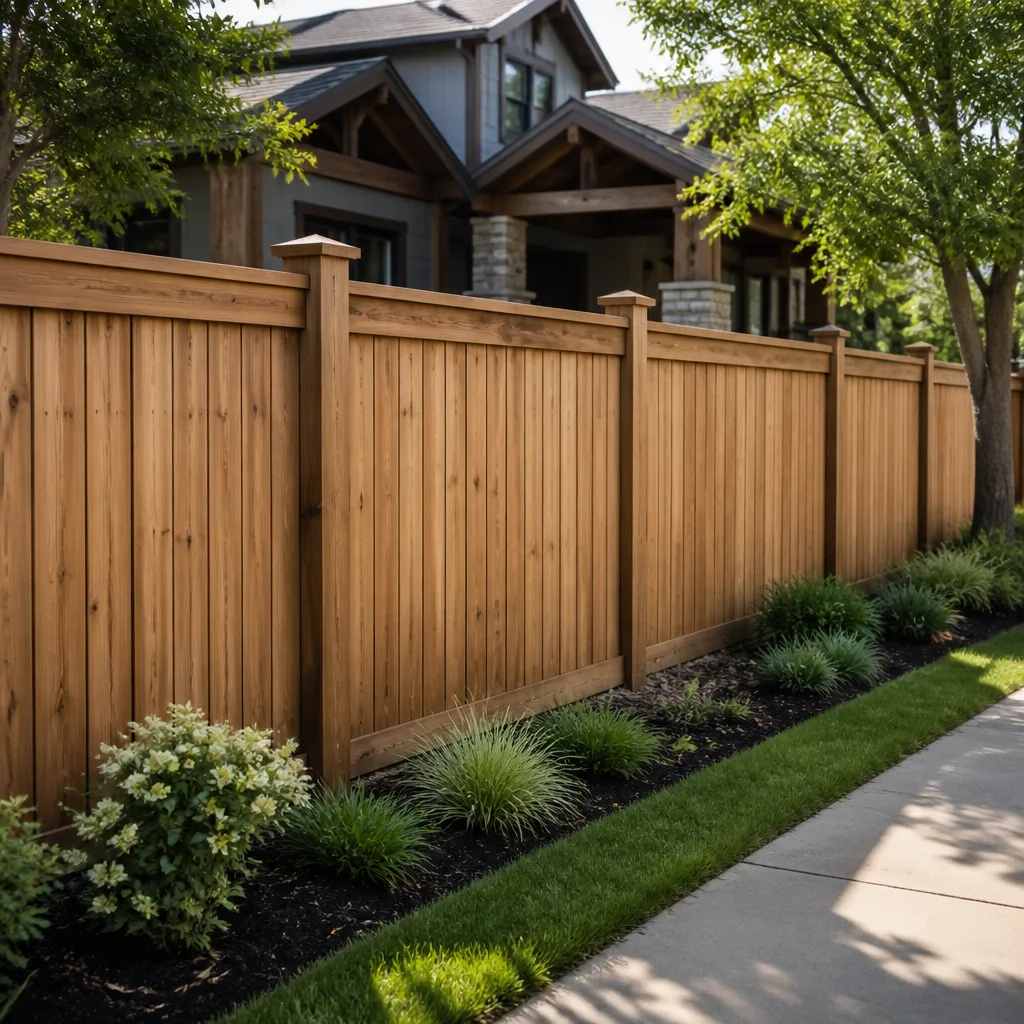
- Fencing over 7 feet tall, and any masonry wall. Fence height rules in Newport Beach are tight. Many neighborhoods have HOA overlays on top of city rules. A fence that violates height or material restrictions is a code violation, and tearing it out doesn’t erase the citation.
The pattern here is simple: if the work touches wires, pipes, structure, or the outside of the building, assume a permit is required until proven otherwise. Newport Beach’s building department has a reputation for active inspection enforcement, particularly on exterior work visible from the street. That visibility factor is important. A neighbor complaint about unpermitted work is a real thing, and it can bring a stop-work order to your project faster than you think.
We’ve seen what happens when the unpermitted work gets flagged. The fix usually costs double the original repair: first to undo the non-compliant work, then to redo it properly, then the permit fee on top. Polaris Contractors manages the permit process as part of every project, from plan review through final inspection. That’s part of what we mean when we say Polaris Contractors home owns the outcome, not just the labor.
California’s Homeowner-Builder Exemption: What It Really Permits
California Business and Professions Code section 7044 creates an exemption that lets a homeowner act as their own general contractor without a license. The language sounds generous. The conditions are stricter than most people realize.
To qualify for the homeowner-builder exemption, you must meet all of these conditions:
- You must own the property. Not a family member, not a trust that you’re a beneficiary of. You personally own it.
- You must reside in the home. This is the big one. The exemption is for work on your primary residence. If you’re fixing up a rental property in Newport Beach, an investment flip on Balboa Island, or a second home in Corona del Mar, you cannot use this exemption. Full stop.
- You must do the work yourself or with unpaid help. The moment you pay someone to help, even a handyman, the exemption is void. You can hire licensed subcontractors for specific trades, but you as the homeowner-builder must be the general contractor pulling permits and coordinating the work. And you cannot then sell the home for one year after completion.
- You must sign a declaration under penalty of perjury. When you pull the permit as owner-builder, you’re stating legally that you meet all these conditions. Lying on that form is a misdemeanor.
- You are legally responsible for workers’ compensation and safety. If you hire unpaid help and they get hurt, your homeowners insurance may deny the claim because the work falls outside standard coverage. You as owner-builder are the employer of record.
Here’s the part that catches Newport Beach homeowners off guard: the exemption applies to the construction process itself, not to the quality or compliance of the work. You can be a legally valid owner-builder and still fail your inspections because the work wasn’t done to code. You can also be a legally valid owner-builder and still be required to disclose unpermitted or owner-built work when you sell, which reduces your buyer pool.
The other wrinkle: if a homeowner-builder project in Newport Beach involves structural changes or engineered systems, the city will still require plans stamped by a California-licensed engineer or architect. That’s a cost and coordination step that trips up first-time owner-builders. General Contractor in Anaheim experience tracks the same way. The permit pathway is the same across Orange County; the difference is which city inspects your work.
The practical takeaway: the homeowner-builder exemption is real but narrow. It works for a patient homeowner doing a contained project with simple scope and compliant plans. It does not work for a major remodel, an ADU, a roof replacement, or anything touching electrical panels or gas lines. For that, you need a licensed general contractor who already has the systems, the subs, and the permit relationships in place. Our General Contractor Maintenance Checklist for Newport Beach Homeowners covers the systems a pro manages for you.
Coastal-Specific Durability: Why Salt Air Changes the DIY Math
Newport Beach’s climate is beautiful and punishing. Salt air travels inland from the Pacific and settles on every exterior surface. The marine layer brings persistent moisture from May through July. The sun bakes coatings dry in the summer. Wood, metal, and paint in Newport Beach do not age the same way they do in Irvine, Tustin, or Anaheim.
Here’s how that coastal environment changes the DIY calculation, particularly on exterior work:
- Fastener corrosion is not a cosmetic problem. On decks, fences, and trellises, standard galvanized fasteners corrode within 3 to 5 years in Newport Beach’s salt exposure. Stainless steel fasteners (typically grade 305 or 316) cost three to four times as much but last decades. A homeowner buying fasteners at a big-box store without knowing the difference ends up with a deck that looks fine for two years and then starts pulling apart.
- Paint and coating failure follows a different time scale. The marine layer means surfaces stay damp longer. Standard exterior paint applied without proper surface prep or without a marine-grade primer tends to blister and peel within 18 to 24 months. Professional crews know to back-brush, to use specific primer systems from companies like Sherwin-Williams or Benjamin Moore, and to schedule work around the moisture cycle. That knowledge is the difference between repainting every two years and repainting every seven.
- Exterior wood movement is constant. The humidity cycles make wood expand and contract year-round. A homeowner who builds a fence or gates with tight clearances will watch those clearances close up by mid-summer. Experienced carpenters in Newport Beach leave deliberate gaps, use specific joinery methods, and select wood species or composites that tolerate the humidity swing.
- Unrated patio covers and pergolas become maintenance liabilities. A DIY pergola built from untreated Douglas fir looks good for one season. By season two, the salt air has started the deterioration process. By season five, the owner is either repairing, replacing, or negotiating with a irritated HOA about the appearance.
- Impact-rated windows and doors are not a suggestion in many coastal zones. Newport Beach building code requires specific wind-borne debris protection on new openings and retrofits in certain areas. A DIY window replacement using off-the-shelf vinyl windows that don’t meet the design pressure rating will fail plan check. You will have spent money on a product that is not legal to install.
The five-year math matters. A homeowner who self-installs a fence with standard fasteners and unrated lumber saves maybe $2,000 upfront. By year five, they’re paying to replace corroded hardware and sections of wood. That first cost advantage disappears. A professionally installed fence with the right materials from a manufacturer like Master Halco or Ameristar, installed by Home Remodeling in Anaheim crews who know the coastal spec, has a service life two to three times longer. The difference shows up in year three, when the DIY fence starts needing attention and the professional one doesn’t.
One of the benefits of working with a full-scope contractor in Newport Beach is that the material selection is tied to this specific climate. Polaris works with 50-plus brands, from roofing systems by GAF and CertainTeed to impact-rated windows from PGT and CGI. The point is not the brand name on a label. The point is that someone on your project knows which material is rated for the salt air, the humidity cycle, and the city’s permitting requirements. That’s what “from the roof down to the pavers” means in practice.
The Middle Ground: Projects Where You Can Legally Help
There’s a reasonable middle ground between full DIY and hands-off hiring. Many Newport Beach homeowners have genuine skills, time, and interest in participating in their own renovation. The question is where the legal and practical line sits.
Here are the project categories where a homeowner can legitimately contribute while a licensed contractor holds the permit:
- Demolition and prep work for interior remodels. Removing non-load-bearing drywall, pulling up old flooring, unscrewing cabinets, and stripping wallpaper are all tasks a homeowner can do with minimal tool investment. This saves labor hours and lets the contractor focus on structural, electrical, and plumbing work that requires licensing.
- Site cleanup and material staging. Keeping the job site tidy, moving debris to the dumpster, and organizing deliveries can shave hours off a project. It’s not glamorous, but it’s real labor.
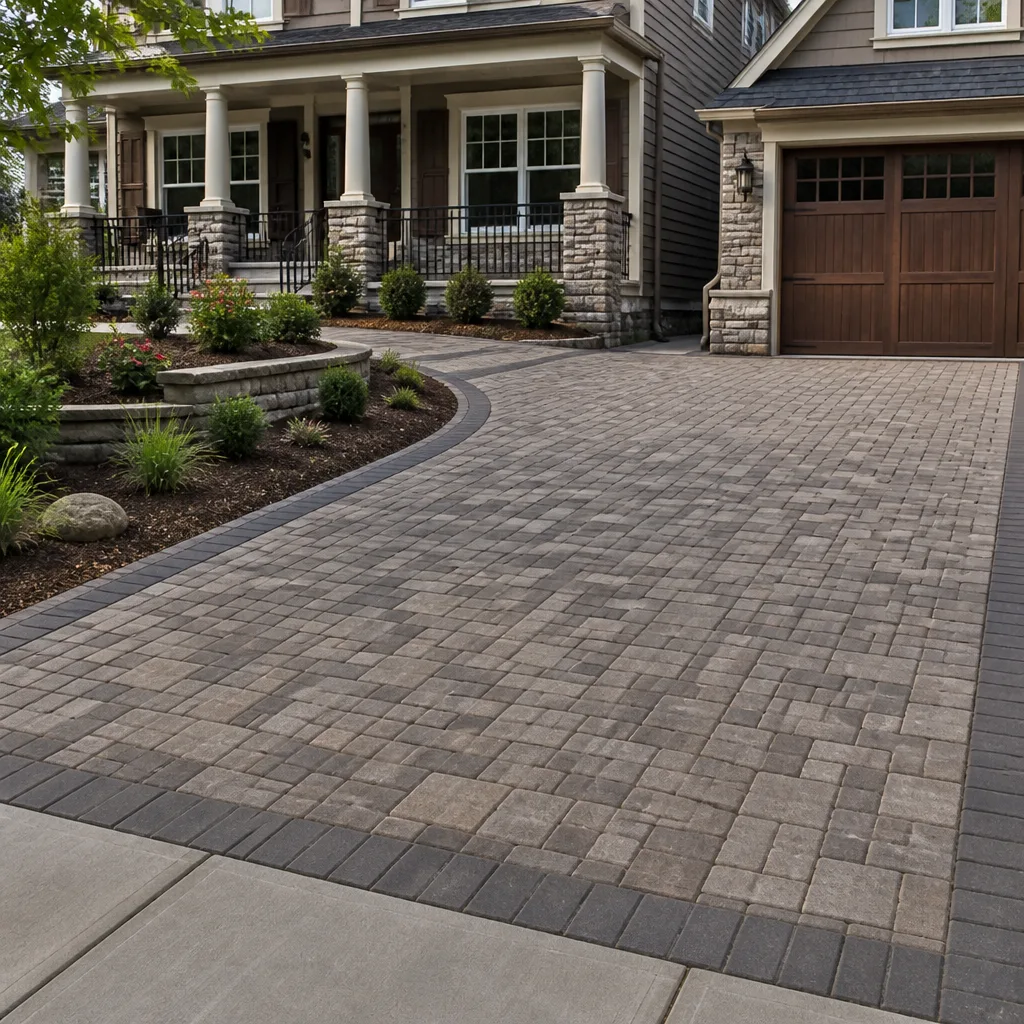
- Finishing work on hardscaping. After a contractor sets the base and lays the pavers or flagstone, a homeowner can spread polymeric sand, assist with joint compaction, and help with edging. These are low-risk tasks that don’t require a license.
- Painting and staining. Interior painting and staining are exempt from the contractor licensing requirement in most cases because they’re considered cosmetic. Exterior painting, however, often requires lead-safe practices under EPA rules if the home was built before 1978. That’s a different compliance layer worth knowing about.
- Material sourcing and demolition planning. Some homeowners love the research and procurement side. If your contractor gives you a specification list, you can shop for the materials. Just be aware that many contractors charge differently for jobs where the homeowner supplies materials, and material warranty claims get complicated when the install is one party and the product is another.
The cleanest middle path is to discuss your participation upfront with your contractor before signing a contract. At Polaris, we build a scope of work that defines exactly which tasks are contractor-only (permit-triggered, licensed trades, safety-critical) and which tasks the homeowner can take on. That clarity prevents the project from stalling because someone made an assumption. It also keeps the permit clean. If the city inspector asks who installed the recessed lights, the answer is the licensed electrician on our team. No ambiguity. If something does go sideways, our General Contractor Troubleshooting: Common Problems and How to Fix Them explains how pros diagnose and resolve issues.
True DIY Cost: A Realistic Framework That Includes Tools, Waste, and Rework
The standard DIY argument cites labor savings. That’s a partial truth. The full truth includes categories most first-time DIYers don’t measure. Here’s a realistic framework for comparing true DIY cost against a professional bid in Newport Beach.
- Tool rental and purchase. A homeowner installing tile needs a wet saw, a mixing drill, trowels, spacers, a leveling system, and a grout float. That’s $300 to $700 in tools if you buy budget-grade equipment. Some you’ll use again. Most you won’t. A professional tile installer already owns these tools and amortizes their cost across decades of projects.
- Material waste. First-time tile setters, framers, and drywall installers routinely waste 15 to 30 percent more material than professionals through miscuts, breakage, and error correction. On a $2,000 tile order, that’s $300 to $600 in waste alone.
- Time value. Your time has value. If a bathroom tile job takes a professional 5 days and takes you 3 weekends plus 6 weeknights, that’s your leisure time, your family time, and your energy spent. What is that worth to you? For many Newport Beach homeowners, the answer is “more than the labor cost of the professional.”
- Permit-failure rework. If your work fails inspection, you pay a reinspection fee, you redo the failed work, and you may need to bring in a licensed professional anyway to correct it. This is the single largest hidden cost in DIY construction. We’ve seen homeowners pay three times the original professional quote because the unpermitted or failed work had to be torn out and redone.
- Insurance coverage gaps. Most homeowners insurance policies exclude damage caused by faulty workmanship. If your DIY plumbing leak floods the kitchen, your insurance may not cover the repair. A licensed contractor’s general liability insurance would cover damages arising from their work.
- Resale disclosure. California requires sellers to disclose all work done on the home, including whether it was permitted. Unpermitted work or work completed under the owner-builder exemption without proper documentation reduces the buyer pool and often becomes a negotiation point. In a luxury market like Newport Beach, where buyers expect documented, code-compliant renovations, that disclosure can cost you the full amount you saved plus a premium.
Here’s a simple comparison framework for a $8,000 bathroom floor and shower re-tile project:
- Professional bid: $8,000. Includes materials, labor, permits, disposal. Timeline: 5 to 7 working days. Outcome: code-compliant, warrantied, insured.
- DIY attempt: $3,200 in materials. $600 in tools and rental. $500 in waste (conservative). $250 in permit and inspection fees if you do it legally. 3 weekends of your time. Risk of failure: moderate to high. Outcome: uncertain quality, no warranty, full personal liability.
The visible savings are about $3,450. The invisible costs include your time, your risk, and the possibility of paying $8,000 later to fix what you installed. In our experience, homeowners who do the honest math usually land on a professional for anything involving waterproofing, electrical, gas, or structural work. The projects where DIY wins are small, contained, and reversible: a single faucet replacement, a toilet swap, a patch-and-paint interior wall. Everything bigger has hidden costs that narrow the gap quickly.
When you’re weighing a professional bid, ask for a written line-item quote. At Polaris, we provide written line-item quotes and fixed pricing so there are no change orders mid-project. That transparency is how you compare a real professional bid against your own estimated DIY cost. Home Renovation in Anaheim clients get the same treatment. The quote is free, the estimate process is not a sales pitch, and the numbers are what they are.
Projects You Should Never DIY in Newport Beach
Some projects are non-negotiable. Not because a homeowner lacks intelligence or capability, but because the consequences of a mistake are too severe, the legal exposure is too great, or the product warranty is void without licensed installation. Here’s the list.
Electrical panel work. Replacing or upgrading an electrical panel, adding circuits, or moving a subpanel is work for a licensed electrician. The risk of electrocution, fire, or code violation is serious. In Newport Beach, where many homes built in the 1960s and 1970s still have original Zinsco or Federal Pacific panels, this work is common and dangerous. A licensed contractor will pull the permit, arrange the utility disconnect, and pass the inspection. This is not a weekend project.
Gas line work. Running new gas lines, moving a gas appliance, or extending a line for a dryer, range, or fireplace involves flaring, pressure testing, and leak-checking. A gas leak in a coastal home with closed windows can be fatal. California requires a plumbing license for gas piping work. Period.
Structural changes. Removing a load-bearing wall, cutting into floor joists, modifying a roof load, or expanding an opening in an exterior wall requires structural engineering and precise execution. The failure mode is not subtle. It’s sagging floors, cracked drywall, misaligned doors, and in the worst case, structural compromise during an earthquake. Newport Beach is in seismic country. The building codes exist because the ground moves.
Roof replacement. Working on a roof in Newport Beach involves height, slope, and often direct sun exposure that makes the surface dangerously hot. It also involves waterproofing details that are invisible until it rains. An improperly flashed roof leak can sit hidden for months before the ceiling stains appear. Roofing manufacturers like GAF and Owens Corning require certified installation for their enhanced warranties to apply, which means a DIY install voids the warranty before it starts.
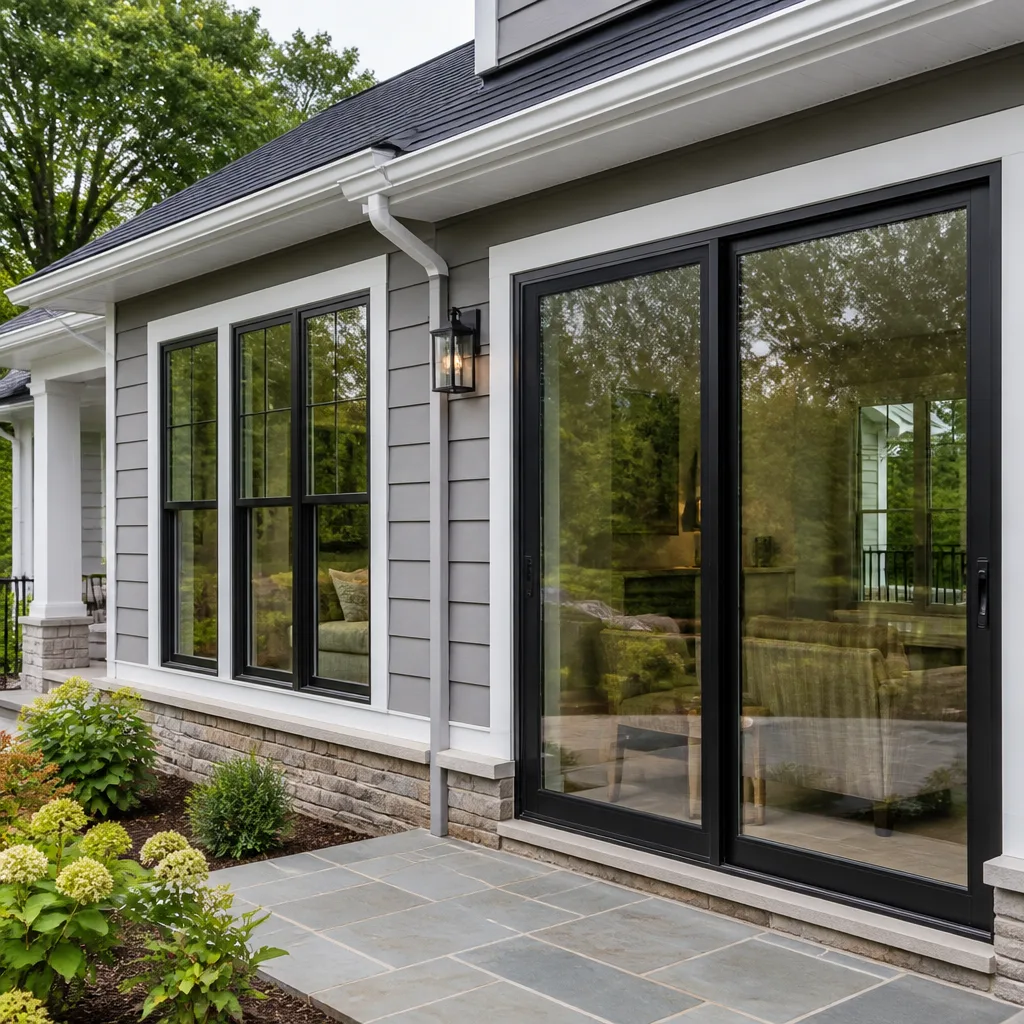
Window and door replacement. The coastal wind-load and impact-rating requirements in many Newport Beach zones mean the product choice and installation method are code-driven. A window installed without the correct flashing detail will leak in the first heavy rain, and the moisture will find its way into the wall cavity. By the time you notice, the remediation is expensive. Brands like Therma-Tru and PGT specify installation methods that a licensed contractor must follow to maintain the product warranty.
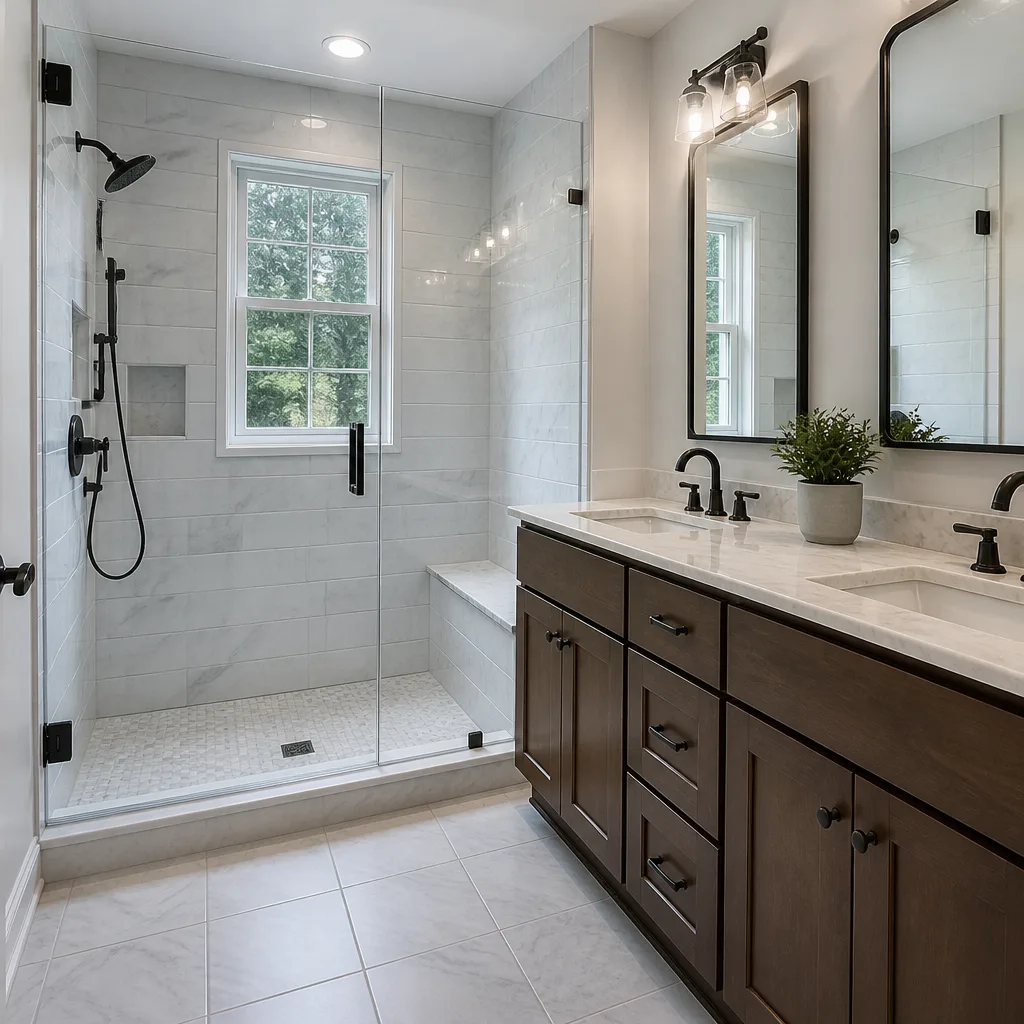
Bathroom waterproofing. This is the sleeper. Many homeowners think tiling a shower is a straightforward process. It is not. The waterproofing layer beneath the tile, whether it’s a Schluter system or a traditional hot-mop, is the actual barrier. If it’s applied incorrectly, water penetrates the wall cavity and subfloor. Mold grows. Wood rots. The tile looks fine from the outside for years. The repair cost, when the problem is finally discovered, is typically three to five times the original installation. We install Schluter systems in Newport Beach bathrooms routinely, and the difference between a correct install and an incorrect one is subtle, invisible, and catastrophic if you get it wrong.
The common thread: these are all systems work. The failure is delayed, the detection is difficult, and the consequence is expensive. That’s the definition of a project that belongs in the hands of a licensed general contractor, not a YouTube tutorial.
Common Mistakes to Avoid
- Assuming “like-for-like” means no permit. Replacing an old recessed light with a new one may not need a permit if the wiring is untouched. But replacing a standard light with a recessed light you’re cutting into new drywall definitely does. The like-for-like test is narrow. When in doubt, call the Newport Beach Building Division before you start, or ask a contractor who pulls permits in the city daily.
- Underestimating the HOA layer. Many Newport Beach neighborhoods have active HOAs with their own architectural review committees, above and beyond city permitting. A fence, color palette, window style, or hardscape choice that passes city code can still get denied by the HOA. Professional contractors who work in Newport Beach know how to coordinate both approvals. DIYers rarely factor this in until the letter arrives.
- Using the wrong fasteners and hardware on exterior work. Standard zinc-plated fasteners fail quickly in salt air. If you’re not sure whether your hardware is rated for coastal exposure, it probably isn’t. Stainless steel is the baseline for anything exterior in Newport Beach.
- Skipping the tile waterproofing layer. The tile is the decoration. The waterproofing is the system. Every shower failure we’ve repaired in Newport Beach started with an inadequate or incorrectly installed waterproofing layer beneath tile that looked beautiful from the outside.
- Pulling an owner-builder permit for work you’re not truly doing yourself. If you hire a handyman to do the work under your owner-builder permit, that’s illegal. The exemption is for work you personally perform. Getting caught can void the permit, trigger penalties, and turn the project into a legal headache.
- Valuing upfront cost over five-year cost. The cheapest material installed correctly will fail on a predictable timeline in a coastal climate. The right material installed correctly costs more on day one and far less by year five. This is the single most important mindset shift for Newport Beach homeowners.
- Not having a contingency budget. Every renovation uncovers something behind the walls. In older Newport Beach homes, that something is often outdated wiring, insufficient insulation, or dry rot in the framing. A professional bid includes realistic contingencies. A DIY plan built on the assumption that everything behind the drywall is perfect will blow up the moment the first panel comes off.
When to Call a Professional
You should call a licensed general contractor when the project involves permits, licensed trades, or systems that failing invisibly would be expensive to fix. That covers most kitchens, bathrooms, additions, roof work, window and door replacements, and any scope that touches electrical, plumbing, or structure. You should also call when you’re halfway through a DIY attempt and realize the project is bigger than you estimated. That happens more often than anyone admits, and it’s fine. The earlier a professional steps in, the less it costs to correct course. For more guides & resources on planning your project, visit our blog.
If you’re reading this guide because you’re weighing a specific project in Newport Beach, the fastest way to get clarity is a free estimate. Polaris Contractors offers free estimates in Newport Beach. Call (855) 473-6535 and we’ll walk your project scope, discuss what needs a permit, and give you a written line-item quote. From there you can make an honest comparison against your DIY estimate with real numbers in front of you.
Frequently Asked Questions
Permit fees in Newport Beach are calculated based on the project’s valuation, and a typical interior remodel can run from several hundred to several thousand dollars depending on scope. The exact fee is determined by the city’s fee schedule at the time of submittal. Call (855) 473-6535 for guidance on what your specific project will require; estimates are free.
Yes, if you own the home, live in it as your primary residence, and do the work yourself or with unpaid help under California’s owner-builder exemption. You cannot hire paid workers except licensed subcontractors, and you cannot sell the property for one year after completion. Most significant remodels fail one or more of these conditions, which is why licensed contractors handle the majority of work in Newport Beach.
If you’re replacing windows with like-for-like inserts in the same openings, a permit may not be required, but a building permit is required for any modification to the opening, any change in window size, or any install of products that change the exterior envelope. Many coastal zones also require wind-load-rated or impact-rated windows. Call (855) 473-6535 and we’ll tell you what applies to your specific address.
California law requires sellers to disclose all unpermitted work, and failure to do so exposes you to legal liability. Buyers in Newport Beach’s market often require unpermitted work to be retroactively permitted, corrected, or priced into the negotiation. The cost of correcting unpermitted work at resale typically exceeds what the professional hire would have cost originally.
Shower waterproofing failures. The tile looks right, the grout lines look clean, and the waterproofing layer beneath is wrong or absent. Water penetrates for years without visible signs, and by the time the damage appears in a ceiling below or an adjacent wall, the repair involves full demolition. We see this pattern regularly in homes throughout Newport Beach.
Usually not, because contractor markup on materials is typically offset by trade discounts you can’t access as a retail buyer, and overage responsibility gets complicated. When you supply materials, you own the warranty claims, the delivery coordination, and the risk of wrong product or damage. When the contractor supplies, the responsibility is consolidated. Ask for a line-item quote to see exactly what the material line items cost. Call (855) 473-6535 and we’ll walk you through it.
The Bottom Line
In Newport Beach, the DIY decision starts with permits, not with skill. California law restricts owner-builder work more than most homeowners realize, and the city’s coastal building requirements add another layer of product specs, HOA rules, and climate-driven material choices that don’t apply inland. The projects where DIY genuinely saves money are small and contained. The projects where DIY quietly destroys value are the big ones: roofing, windows, bathrooms, structural changes, and any electrical or gas work. Hire a licensed contractor for those. The free estimate is the cheapest research you’ll ever do. Call (855) 473-6535 and get real numbers before you decide.
Written by the team at Polaris Contractors, serving Newport Beach since 2018.
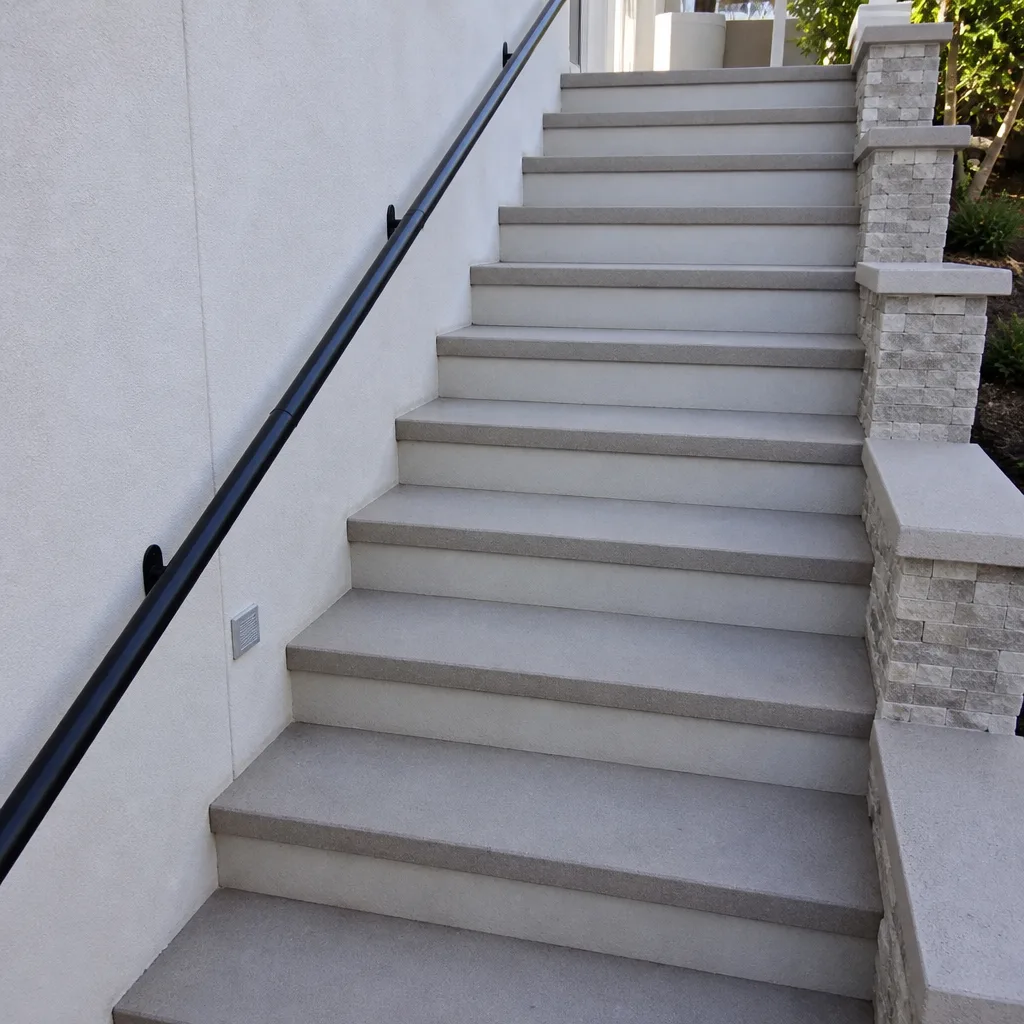
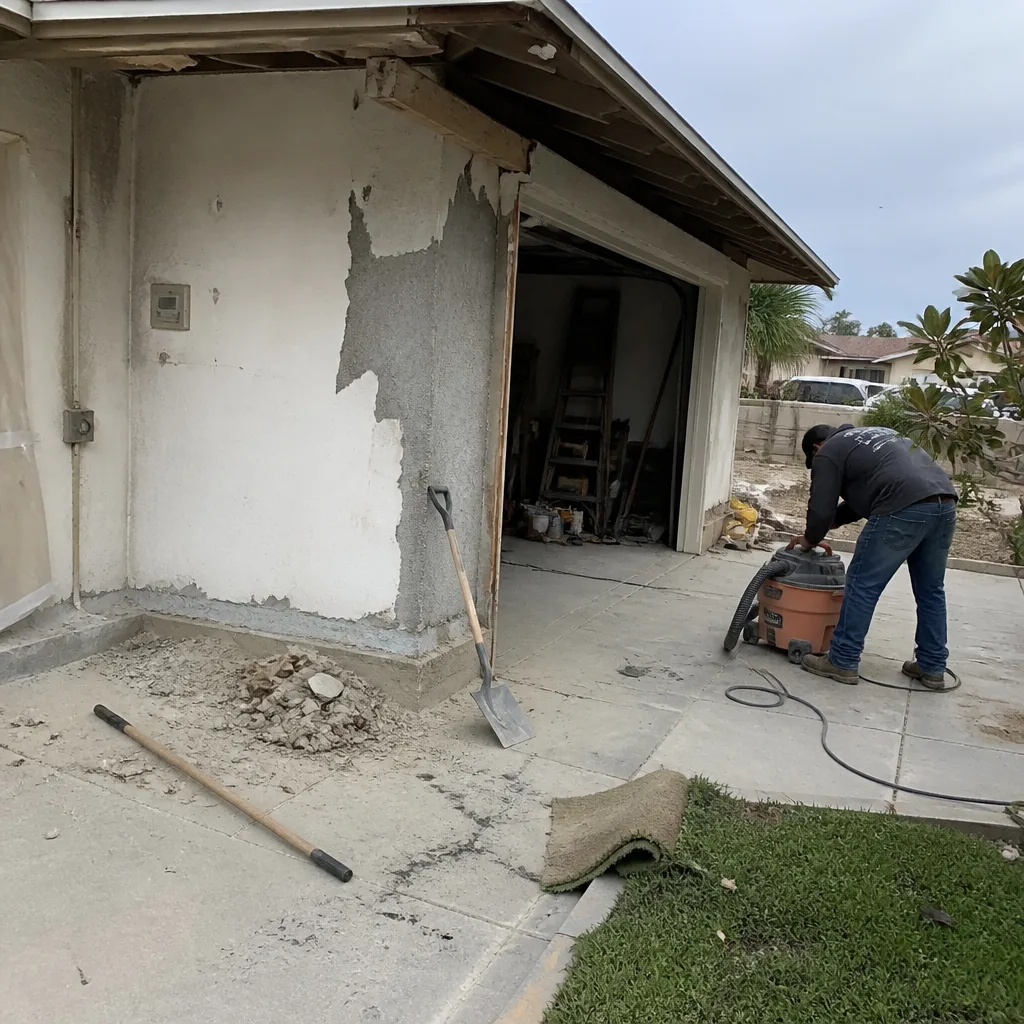
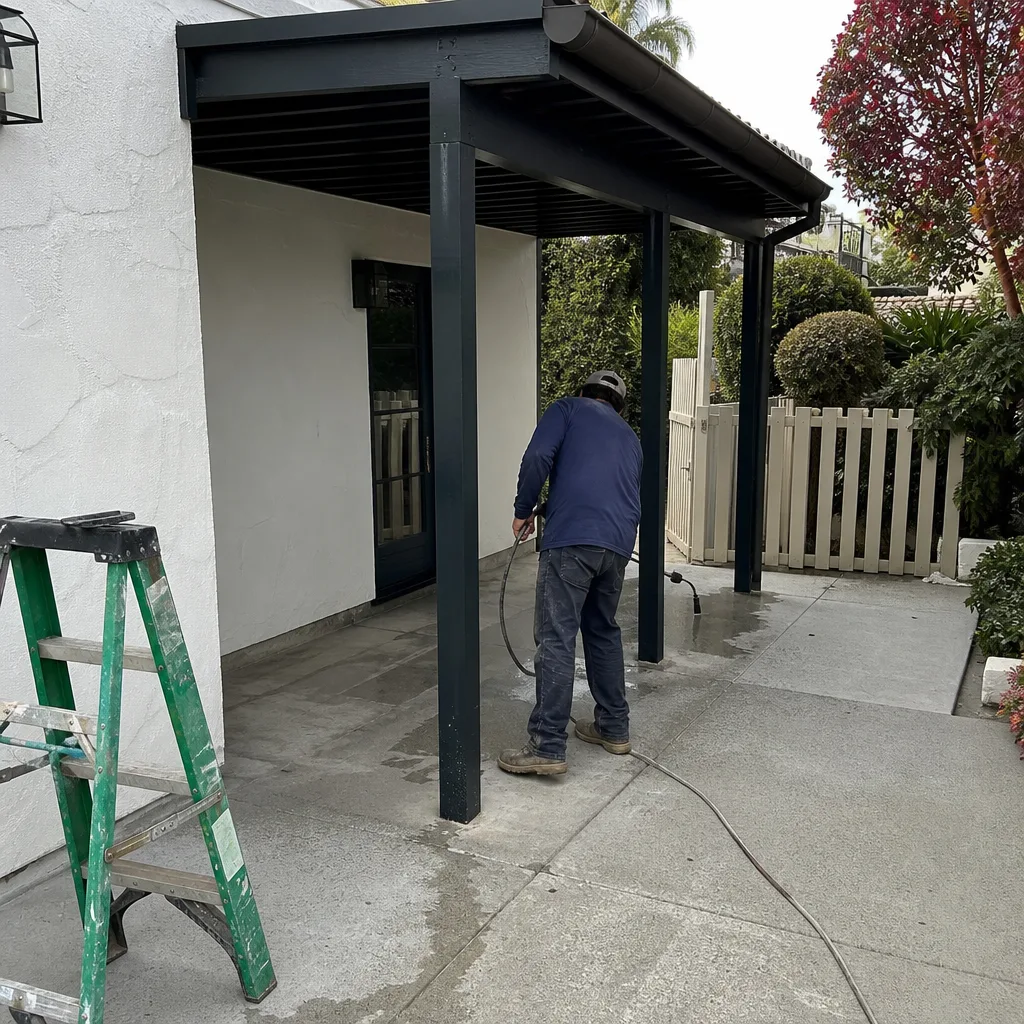
See the difference
 Before
 After
 Before
 After
 Before
 After